Mat Pilates: What It Is, What You Need and How to Start
Mat Pilates needs little equipment, but the right class still matters. Here is what beginners should know about the setup, first session and difference from reformer Pilates.
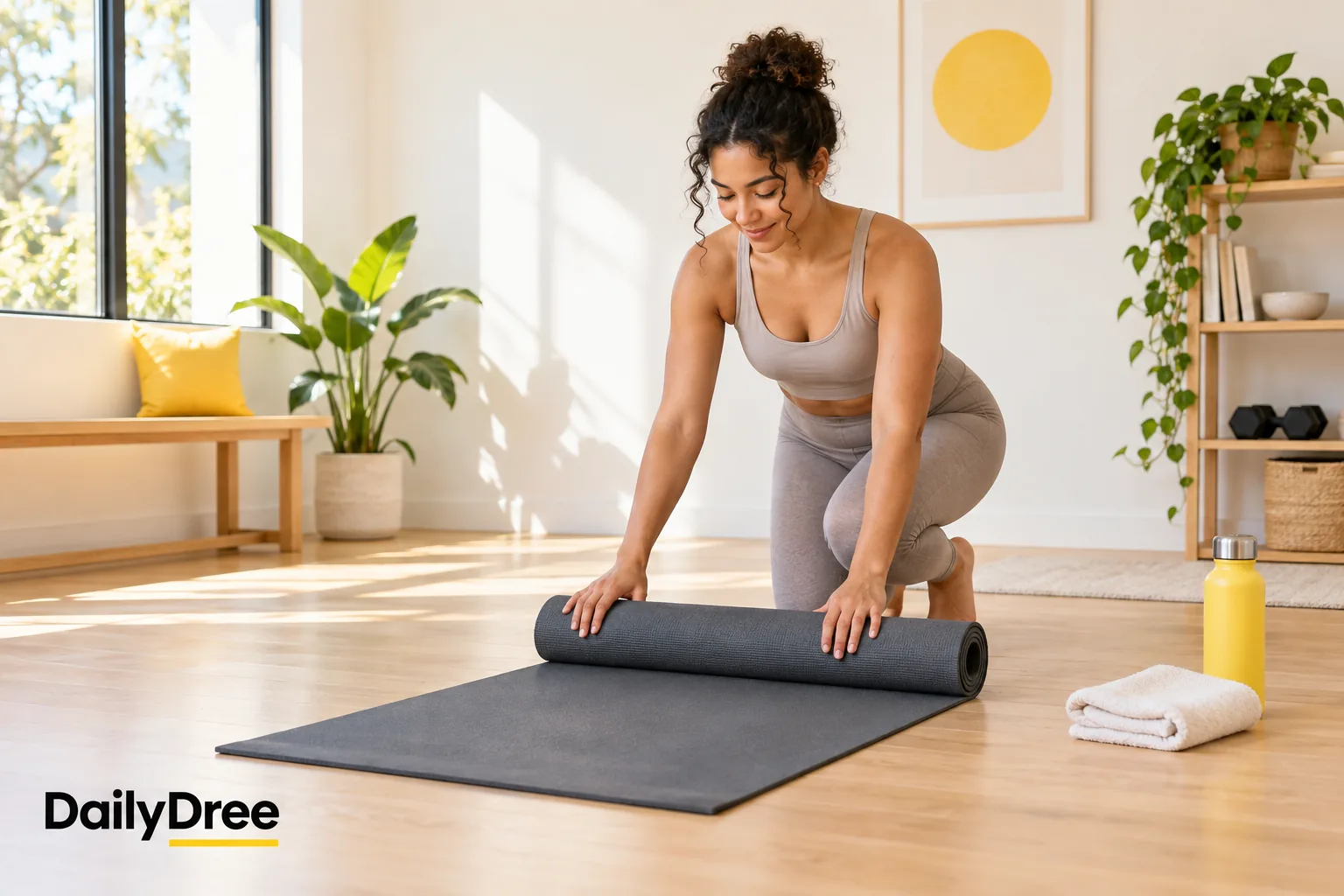
Mat Pilates is Pilates performed mainly on an exercise mat rather than on a reformer machine. It uses controlled movement, breathing and body awareness, with body weight providing much of the resistance. Some classes add a small ball, resistance band or ring, but a beginner does not need a collection of equipment to start.
The simple setup is one reason mat Pilates is widely accessible: you can take a group class, follow an appropriately levelled video or practise in a clear space at home. Simple equipment does not mean every session is easy. The pace, movement selection, range and teaching can make two beginner-labelled classes feel very different.
This guide explains what mat Pilates is, what happens in a typical class, how it compares with reformer Pilates and how to choose a responsible beginner option. It offers general information rather than medical advice or a personalised exercise plan.
The short answer
Mat Pilates is a form of Pilates done on a mat, usually using body weight and sometimes small props. Beginners typically need comfortable clothes, a supportive mat, enough clear floor space and a class or video that explicitly teaches fundamentals. Choose controlled, well-explained instruction and stop if you feel pain or become unwell.
What is mat Pilates?
Mat Pilates is a mat-based way of practising Pilates principles. The NHS describes Pilates more broadly as a form of exercise focused on balance, posture, strength and flexibility. In a mat class, the floor and mat form the main base of support; there is no sliding carriage or spring system.
A lesson may include movements in lying, side-lying, seated, kneeling or standing positions. Teachers often use breathing and alignment cues to help participants move with control. Exact terminology and sequences vary by instructor, training background and class level.
Mat Pilates is not one standard routine. A fundamentals class that pauses to explain setup is different from a fast flow marketed to experienced participants. The word mat tells you about the equipment, not the difficulty.
What happens in a mat Pilates class?
A beginner class often starts with an introduction to the session and equipment, then explains the breathing or alignment cues used by that teacher. The main sequence may move through lying, seated, kneeling or standing positions and should allow time for setup, rest or an alternative.
You might hear phrases such as neutral spine, pelvic position, rib cage, engage or move with control. You do not need to memorise this vocabulary beforehand. A good beginner teacher explains what a cue means and accepts questions when it is unclear.
Pain is not a sign that you are doing Pilates correctly. The NHS advises stopping immediately if you feel pain or become unwell. If an instructor treats pain as something everyone should push through, pause and reconsider the class.
- The instructor introduces the session and explains any equipment.
- You settle into a starting position and learn the class cues.
- The lesson moves through a controlled sequence at the stated level.
- The instructor offers a smaller range, a prop or another position where appropriate.
- The session ends with a gradual reset rather than an abrupt stop.
Mat Pilates vs reformer Pilates
Mat and reformer Pilates use related movement ideas in different environments. Neither format is automatically more advanced. A reformer can support one movement and challenge another, while mat work can feel demanding because the machine is not providing support or external feedback. Class level and teaching quality matter more than the equipment label.
| Feature | Mat Pilates | Reformer Pilates |
|---|---|---|
| Main setup | Exercise mat and body weight | Sliding carriage, springs, straps and footbar |
| Small props | Optional ball, band, ring or block | May be used in addition to the machine |
| Access | Studios, gyms, community spaces and online | Mostly specialist studios and some gyms |
| Cost | Often lower; home sessions may be free | Usually higher because of equipment and studio instruction |
| Feedback | Teacher cues and contact with the floor | Machine, springs and straps add support or resistance feedback |
| Beginner priority | Choose a fundamentals lesson with clear setup | Take an induction that explains the machine |
What equipment do beginners need?
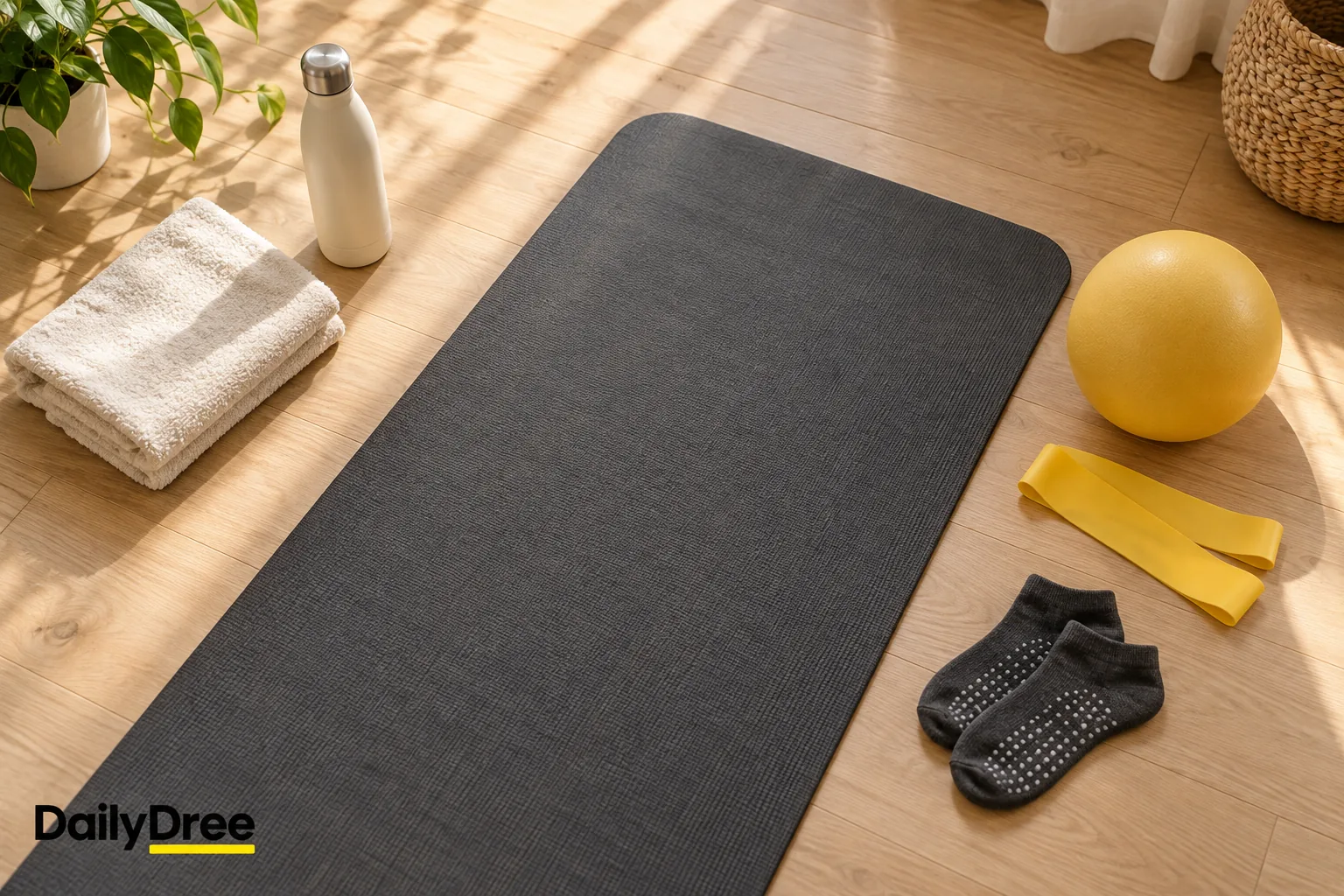
A mat is the essential item. It should provide enough cushioning and grip for the surface underneath. A very slippery mat can be distracting; an extremely soft surface may make some positions feel unstable. You do not need the most expensive option before you know whether the practice suits you.
Wear comfortable clothing that lets you bend and reach without constant adjustment. Bring water and any personal towel required by the venue. A soft ball, light resistance band, Pilates ring, block or folded towel may appear in a lesson, but props are not a shopping list for every beginner. Use only what the instructor specifies and explains.
Some studios request grip socks; others allow bare feet. Check the venue policy. Ordinary slippery socks may not be suitable on a smooth mat or floor.
How much space do you need at home?
Choose a clear, stable surface with enough room to lie on the mat and move your arms and legs without hitting furniture, lamps, pets or other people. Place the screen where you can see it without repeatedly twisting your neck away from the position being taught.
A beautiful studio setup is optional. Clear space, suitable instruction and the ability to stop matter more.
- Read the class description and confirm the level.
- Check the equipment list before starting.
- Remove objects around the mat.
- Make sure the surface is dry and the mat does not slide.
- Keep water nearby and know how to pause the video easily.
Is mat Pilates good for beginners?
It can be, especially when the class is explicitly designed for beginners. The low equipment requirement makes mat Pilates easy to try and repeat. However, an unlabeled online video or advanced flow can move too quickly to explain positions and alternatives.
Look for words such as beginner, fundamentals, introduction or back to basics. The NHS beginner Pilates video is described as suitable for beginners, improvers and people returning to basics, and notes that a mat is useful. It also states that the session is general exercise rather than treatment for a particular cause of pain or condition.
How to choose a responsible class or video
An impressive pose can attract attention without showing how the lesson is taught. Read the full description, duration, assumed experience and equipment requirements. Check whether the instructor provides relevant training or certification information and stays within a responsible scope.
A beginner lesson should allow pauses, a smaller range or another position. Be cautious when marketing promises to cure pain, repair an injury, correct a condition, guarantee weight loss or transform your body on a fixed timeline. A general class cannot assess or treat an individual medical issue.
A short social-media clip may omit preparation, transitions, contraindications and the easier option. A structured lesson gives you more context and time to understand the setup.
A low-pressure way to begin
CDC guidance on becoming more active recommends starting slowly and working up to more time or more challenging activity. For mat Pilates, that can mean choosing a short fundamentals session, learning the vocabulary and repeating a manageable lesson before increasing duration or difficulty.
There is no prize for finishing a video that no longer feels appropriate. Pausing, choosing a different class or asking for individual guidance can be the better decision.
- Preview the lesson and confirm that it is intended for beginners.
- Complete only the portion you can follow with control and without pain.
- Note any cue or position you did not understand.
- Rest and consider how you felt during and after the session.
- Repeat the same level before moving to a faster or more complex class.
Common mat Pilates myths
You do not need to be flexible before starting. A beginner class should offer a manageable range and avoid treating one visible shape as the only successful result. Mat Pilates is also not automatically the easy version; equipment does not determine difficulty.
More cushioning is not always more suitable. The mat needs to be comfortable while remaining stable. Likewise, more classes do not automatically mean faster progress. Adding frequency, duration and difficulty together makes it harder to judge what you tolerate.
Online classes are not interchangeable. Videos differ in level, teaching detail and safety language. Select the instructor and session carefully, and do not use a generic video as diagnosis or rehabilitation.
Mat Pilates and general activity guidance
General US physical-activity guidance for adults includes aerobic activity and muscle-strengthening activity, but you should not assume that every mat Pilates class satisfies every weekly target. Sessions vary in duration and intensity. Consider what the actual class involves and include other suitable activity based on your circumstances.
For people who are currently inactive, federal guidance recommends starting with small amounts and building gradually. A sustainable schedule is one you can recover from and realistically repeat, not the most ambitious calendar you can create on day one.
When to ask for professional advice
The NHS advises getting guidance from a healthcare professional before its beginner exercise video if you are unsure whether the exercises suit your fitness, have a health problem, injury or symptoms, feel unwell, recently had a health event such as surgery, or are pregnant or have recently given birth.
CDC guidance also notes that people with chronic conditions may want to discuss suitable types and amounts of activity with a healthcare provider. An article cannot assess your symptoms, recovery, medication, pregnancy, disability or injury. Stop immediately if you feel pain or become unwell, and seek appropriate help if symptoms concern you or do not resolve.
Your mat Pilates starter checklist
Mat Pilates has a simple physical setup, but good instruction still matters. Begin with a genuine fundamentals class, learn the cues at your own pace and let consistency, not comparison, shape your next step.
This article provides general educational information. It does not replace medical advice, diagnosis, treatment or individualized exercise instruction. Exercise carries risk. Stop if you feel pain or become unwell, and seek appropriate professional advice when you are unsure whether an activity is suitable.
- Choose a class clearly labelled for beginners.
- Check the instructor training and full class description.
- Use a stable, non-slip mat on a clear surface.
- Wear comfortable clothing and follow the venue sock policy.
- Preview required props instead of improvising unfamiliar equipment.
- Keep the screen visible without twisting to watch it.
- Work within a comfortable range and take breaks.
- Stop if you feel pain or become unwell.
- Repeat a manageable level before adding complexity.
- Ask an appropriate professional when you are unsure whether the activity suits you.
Frequently Asked Questions
What is mat Pilates?
Mat Pilates is Pilates performed mainly on an exercise mat using controlled movement, breathing and body awareness. Body weight provides much of the resistance, although a class may use optional small props.
Is mat Pilates suitable for complete beginners?
It can be when the class is specifically designed for beginners and explains setup, cues and modifications. The word mat alone does not indicate that a class is easy.
Do I need special equipment for mat Pilates?
A supportive exercise mat is the main item. Comfortable clothing and water are useful. Small balls, bands or rings are optional and should be used only when the lesson calls for them.
Is mat Pilates harder than reformer Pilates?
Neither is automatically harder. A reformer can provide support or resistance, while mat work relies more on your contact with the floor and body weight. The instructor, class level and movement choices determine the challenge.
Can I do mat Pilates at home?
Yes, if you have a clear, stable space and choose an appropriately levelled lesson. Keep the screen visible, preview the equipment and pause whenever you need to reset or rest.
How often should a beginner do mat Pilates?
There is no universal schedule. Begin with a manageable amount, notice how you recover and increase gradually. Your health, other activity and professional advice may change what is appropriate.
Can mat Pilates treat back pain or an injury?
Do not use a general class or article as treatment. The NHS states that its beginner video is general exercise and is not aimed at treating a particular cause of pain or condition. Seek individual guidance from an appropriate health professional.
Sources
◆