Pilates for Beginners: Mat vs Reformer, What to Expect and How to Start
Mat or reformer? Home video or studio class? This beginner guide explains the choices, what your first session may include and how to start without rushing.
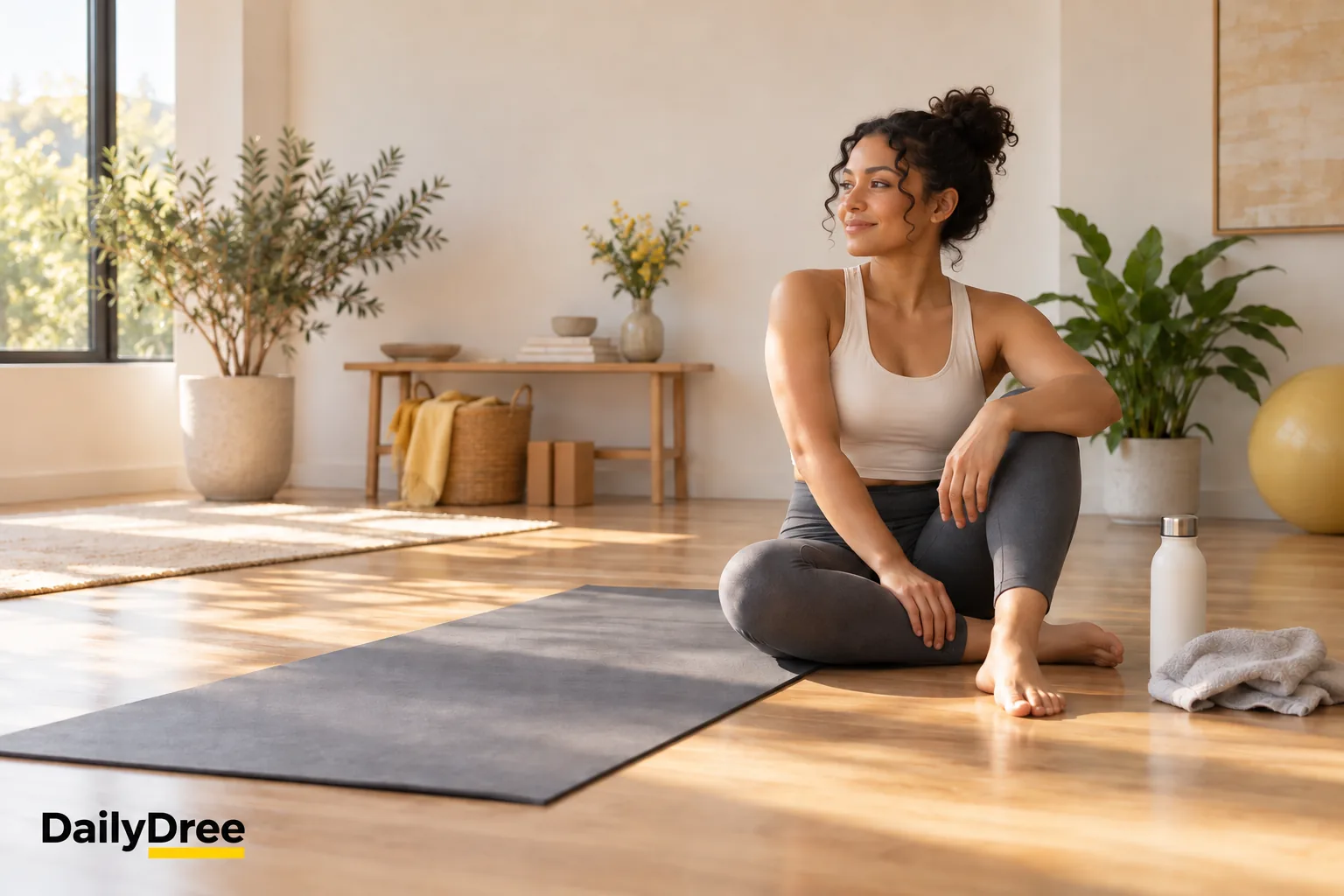
Pilates can look intimidating when your first glimpse is an advanced move or an unfamiliar reformer machine. A beginner class is much less dramatic. It usually starts with small, controlled movements, careful breathing and enough time to learn the setup.
You do not have to be flexible, strong or experienced before you arrive. The point of a beginner session is to learn, not to perform. This guide explains the difference between mat and reformer Pilates, what a first class may feel like, what to bring and how to start gradually. It is general educational information, not medical advice or an individualized exercise program.
The short answer
Mat Pilates is usually the simplest and least expensive way to start because it needs little equipment and can be practised at home or in a group. Reformer Pilates uses a sliding carriage, springs and straps, which can provide both support and resistance.
Neither format is automatically better for every beginner. The better first choice is the one with clear beginner instruction, appropriate modifications and a setting in which you feel comfortable.
What is Pilates?
Pilates is a movement practice built around controlled movement, breathing and body awareness. The NHS describes Pilates as focusing on balance, posture, strength and flexibility. Classes vary: some are gentle and technique-led, while others are faster, longer or more demanding.
Mat Pilates is performed mainly on an exercise mat using body weight and sometimes small props. Reformer Pilates is performed on a specialised machine with a moving carriage, springs, straps and a footbar. The shared principles matter more than the equipment. A well-taught beginner class should help you understand the setup, move with control and choose an easier version when needed.
Mat Pilates vs reformer Pilates
Both formats can welcome beginners, but access, cost and teaching style differ. A reformer can make one exercise more supportive and another more challenging depending on the setup. Mat work can also be demanding because your body is not supported by a moving carriage.
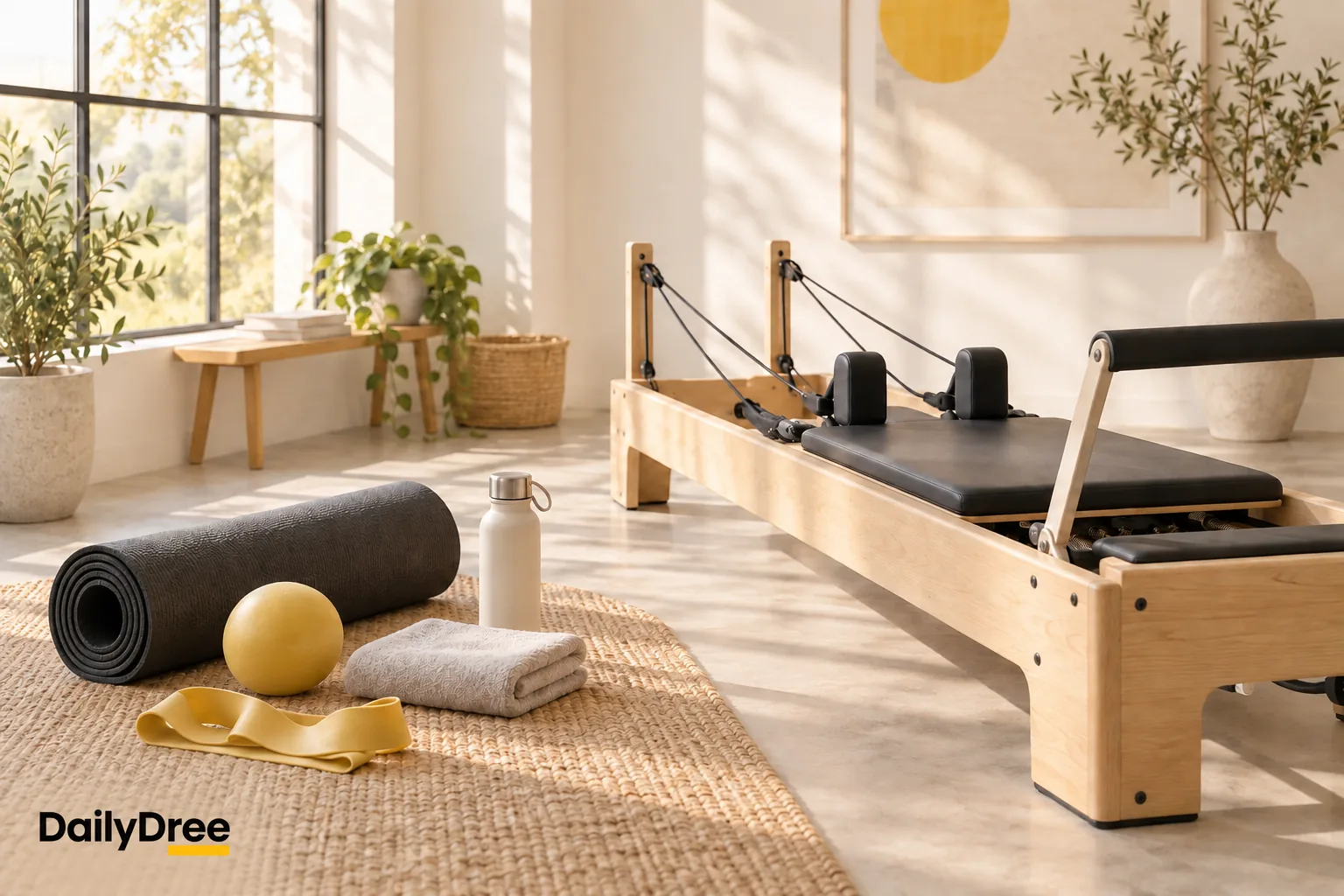
| Question | Mat Pilates | Reformer Pilates |
|---|---|---|
| Equipment | A mat; sometimes a small ball, band or ring | A machine with carriage, springs, straps and footbar |
| Where it is offered | Studios, gyms, community classes and online | Mainly specialist studios and some gyms |
| Typical cost | Usually lower; home sessions can be free | Usually higher because equipment and studio instruction are involved |
| Beginner advantage | Easy to access and repeat | Springs and straps can offer feedback, support or resistance |
| Beginner challenge | Position can be harder to sense without feedback | The machine and spring changes may feel unfamiliar |
| Best first step | A clearly labelled beginner lesson | A beginner induction with an instructor who explains the machine |
Is reformer Pilates harder than mat Pilates?
Not necessarily. Class level, pace and instructor choices make a bigger difference than the label alone. If a studio offers an induction, take it. Ask whether the class assumes prior experience, how many people attend and whether the instructor offers alternatives.
Mat Pilates can be an accessible starting point because it has a low equipment barrier. The important detail is instruction: choose a true beginner session instead of copying isolated advanced moves from a short social-media clip.
What to expect in your first Pilates class
Every instructor has a different style, but a beginner session may begin with breathing and alignment cues, continue through controlled lying, sitting, kneeling or standing movements, and include pauses for setup, rest or modifications.
You may hear phrases such as neutral spine, rib cage, pelvic position or move with control. Do not worry about memorising them before class. Ask the instructor to explain any cue that does not make sense. You may feel muscles working in unfamiliar ways, but pain is not a goal. The NHS advises stopping immediately if you feel pain or become unwell.
- Arrive early enough to meet the instructor and learn the setup.
- Tell the instructor about relevant limitations requested by the provider.
- Follow the beginner version and take a break whenever you need one.
- Ask for a clearer cue or alternative when a position does not feel right.
- Leave advanced variations for a later session.
What to wear and bring
Choose comfortable clothing that lets you bend and reach without distraction. Clothing does not need to be tight, although an instructor may find it easier to see your positioning when fabric is not extremely loose.
Bring a water bottle, a mat if the venue does not provide one, and any grip socks required by the reformer studio. Studios set their own footwear and sock rules, so check before you travel. Avoid buying a collection of props before your first session; a basic mat is enough for many introductory classes.
A cautious four-week beginner plan
This sample is a way to build familiarity, not a prescription. Keep the effort comfortable enough to follow instructions and maintain control. CDC guidance for becoming more active recommends starting slowly and building up over time.
- Week 1: Try one short beginner mat session or one studio introduction. Focus on understanding the cues rather than completing every repetition.
- Week 2: Complete one or two beginner sessions with rest between them. Repeating the same lesson can make the movements less unfamiliar.
- Week 3: If you recovered comfortably, try two beginner sessions. Keep at least one familiar and ask about any cue you still do not understand.
- Week 4: Continue beginner mat work, try a supervised reformer induction or combine the two. Increase duration or difficulty gradually, not all at once.
Five beginner ideas to learn, not rush
Breathing with movement can help you avoid holding your breath and keep the pace controlled. There is no single starting shape that suits every body, so a prop, smaller range or another position may be more appropriate.
A larger movement is not automatically a better movement. Beginners often learn more by using a manageable range and moving steadily. Stopping early can be the sensible choice when control becomes difficult. Treat Pilates as a skill you practise rather than a performance you must perfect on day one.
How to choose a beginner Pilates class
Look for specific evidence that the class welcomes new participants. The description should state the level, the instructor should explain modifications, and you should be encouraged to rest or choose another version. Clear safety language matters more than glamorous marketing.
- Ask whether the class is designed for complete beginners.
- Check whether a reformer induction or equipment explanation is included.
- Ask what training or certification the instructor holds.
- Find out how large the class is and whether modifications are offered.
- Avoid classes that dismiss pain or promise to cure a condition, guarantee weight loss or transform your body on a fixed timeline.
Can you start Pilates at home?
Many beginners start with a mat and a well-structured video. Choose a session clearly marked for beginners, presented by a suitably trained instructor and long enough to explain setup and alternatives. The NHS offers a 45-minute beginner video for people starting, improving or returning to basics, while making clear that it is general exercise rather than treatment for a cause of pain or a condition.
Clear enough floor space to move without hitting furniture, keep the screen visible without twisting, preview the equipment list and stop the video whenever you need to reset or rest. Do not use a home video as a diagnosis or rehabilitation plan.
Common beginner mistakes
Words such as flow, power, athletic or intermediate may signal a quicker or more demanding class. Pick a session that explicitly says beginner, fundamentals or introduction. A short social clip may show the eye-catching moment and omit the preparation; a full lesson is more useful.
Avoid comparing your range with the person next to you or changing several variables at once. Longer sessions, more classes and harder variations do not need to arrive in the same week. Repeat a manageable class and add one change at a time.
When to get advice before starting
The NHS advises speaking to a health professional if you are unsure whether the exercises are suitable, have a health problem or injury, have symptoms, recently had a health event such as an operation, or are pregnant or have recently given birth. CDC guidance also recommends discussing suitable types and amounts of activity when a chronic condition or disability affects your choices.
That conversation should be individual. A general article cannot assess your symptoms, recovery, medication, pregnancy or injury. Stop if you feel pain, dizziness, unusual shortness of breath or become unwell.
Your first-session checklist
The best first Pilates session is not the one that looks most impressive. It is the one that helps you understand the practice, finish safely and feel confident enough to return.
- Choose a class labelled beginner, fundamentals or introduction.
- Check the instructor and studio requirements.
- Share relevant health information requested by the provider.
- Arrive early for a reformer setup.
- Work within a comfortable range and take breaks without apology.
- Stop if you feel pain or become unwell.
- Repeat a manageable lesson before chasing a harder one.
A note on general activity guidance
General US physical-activity guidance for adults includes weekly aerobic and muscle-strengthening targets, but a Pilates session should not automatically be assumed to satisfy every target. Its contribution depends on the class and your effort, and a balanced routine may include walking or other activity you enjoy.
This page provides general educational information and does not replace medical advice, diagnosis, treatment or individualized exercise instruction. Exercise carries risk. Stop if you feel pain or become unwell, and seek appropriate professional advice when you are unsure whether an activity is suitable for you.
Frequently Asked Questions
How often should a beginner do Pilates?
There is no universal number for everyone. One or two manageable beginner sessions in a week can be a practical way to learn, then you can adjust based on recovery, other activity and professional advice. Start small and increase gradually.
Is mat or reformer Pilates better for beginners?
Both can work. Mat Pilates is more accessible and easier to repeat at home. A reformer can provide support and feedback, but the machine needs clear instruction. Choose the best-taught true beginner option available to you.
Do I need to be flexible before starting Pilates?
No. Flexibility is not an entry requirement. Choose a beginner class, use modifications and stay within a comfortable range.
Do beginners need Pilates equipment?
For mat Pilates, a mat is often enough. A studio should tell you if you need grip socks or small props. Reformer Pilates requires the machine and is best learned with an introductory explanation.
Is Pilates cardio or strength training?
Pilates sessions vary. Some may contribute to muscle-strengthening activity, and faster sessions may raise your heart rate, but do not assume every class replaces all aerobic or strength guidance. Consider the actual intensity and include other suitable movement.
Can I do Pilates if I have back pain or an injury?
Do not rely on a general beginner article to make that decision. The NHS notes that its beginner video is not designed to treat a specific cause of pain or condition. Ask an appropriate health professional and tell the instructor before class.
Sources
◆